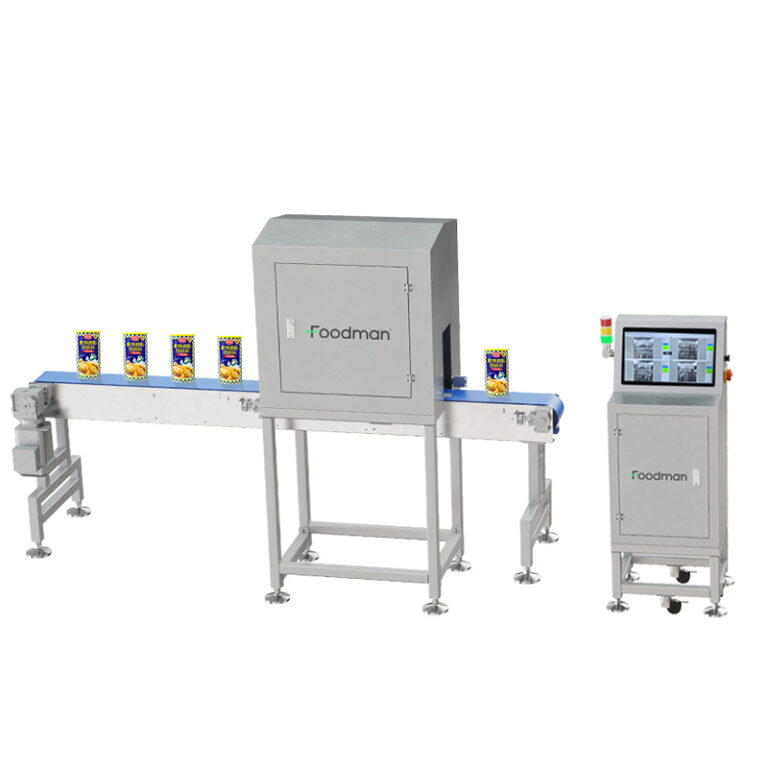
A vision inspection machine is an advanced automated system that utilizes digital cameras, optical lenses, and specialized lighting to inspect industrial products. These systems capture high-resolution visual data from items moving continuously along high-speed production lines.
Specialized computers then process these images instantly to evaluate overall quality, verify label accuracy, and detect surface defects. By replacing manual human inspection with automated digital evaluation, manufacturing facilities eliminate operator fatigue and subjectivity entirely across operational shifts.
Intelligent optical units are essential to the operation of industrial plants because they ensure that product requirements and safety standards are adhered to in a stringent manner. Each item that is brought through the inspection zone is photographed, measured, and checked against the quality requirements that have been pre-programmed previously.
Engineering teams at Foodman design optical units that integrate smoothly into existing factory layouts and legacy frameworks. When an anomaly or deviation is detected, the system triggers an automated rejection signal without interrupting line speed. This precise capability ensures product quality and reduces packaging-related returns.
Hardware Architecture: Cameras, Lenses, and Lighting Modules
The physical build of a modern optical screening system relies heavily on high-performance digital image sensors. Industrial cameras utilize charge-coupled device or complementary metal-oxide-semiconductor sensors to capture sharp grayscale or color frames with exceptional clarity.
Lens selection determines the field of view and optical magnification required to resolve microscopic surface flaws clearly under pressure. Proper focal length ensures that the camera maintains sharp focus across varying product geometries and dynamic conveyor speeds.
Illumination modules serve as the critical foundation for successful optical data acquisition in industrial manufacturing environments. Without controlled lighting, cameras cannot capture consistent imagery amidst fluctuating factory ambient light conditions.
Engineers deploy specialized light-emitting diode arrays configured in distinct angles to highlight specific physical defects. Backlighting creates high-contrast silhouettes ideal for checking container fill levels and outer dimensional boundaries. Coaxial lighting directs uniform illumination straight down through the optical lens to reveal subtle surface scratches.
The Image Capture and Illumination Mechanism
Capturing crystal-clear images of fast-moving products requires ultra-fast electronic shutter speeds measured in microseconds. This rapid exposure prevents motion blur from obscuring critical details like expiration dates, serial numbers, or barcode integrity.
Strobe lighting synchronizes perfectly with the camera shutter to freeze objects traveling at high linear velocities effortlessly. Adaptive strobe controls adjust lighting intensity dynamically during operation to guarantee uniform image brightness across highly reflective packaging films.
Beyond shutter speed, lighting geometry also determines how defects appear to the optical sensors. Diffuse dome lighting eliminates harsh reflections on shiny metallic containers, ensuring uniform surface visibility.
Low-angle ring lighting casts deep shadows across microscopic pinholes or surface dents on plastic containers. Tailoring the lighting setup to the specific product maximizes contrast between normal and defective areas. This precise optical optimization forms the baseline for subsequent digital image processing routines.
Algorithmic Processing and Defect Identification Workflows
Once an image is captured, raw pixel data streams instantly into high-performance industrial processing units. Sophisticated software converts the visual frame into a mathematical matrix for immediate computational analysis and verification.
During runtime, a vision inspection machine executes complex algorithms to compare live data against stored master templates seamlessly. Pattern matching tools evaluate structural alignment, logo placement, and typography clarity with extreme mathematical precision.
Blob analysis algorithms isolate contiguous groups of pixels to detect foreign particles, stains, or missing components. Edge detection software measures exact dimensional boundaries to verify container diameters and cap torque heights.
Optical character recognition software reads printed lot codes and expiration dates despite common line challenges like character deformation and contrast variation. Foodman systems apply advanced machine learning models to adapt to minor natural variations without generating false rejections.
Core Functional Capabilities in Industrial Screening
A fully operational vision inspection machine performs multiple distinct quality checks simultaneously during a single production pass. It verifies that tamper-evident seals are intact, container threads are undamaged, and safety foils are properly positioned.
Missing labels, crooked barcodes, and incorrect graphics are flagged instantly before goods leave the facility floor. Automated screening capabilities uphold absolute product consistency across complex manufacturing operations without slowing down throughput.
Modern facilities depend on these automated screening capabilities to maintain consistent quality control standards globally. By executing millions of rapid calculations per second, optical systems eliminate human error from final packaging lines.
Foodman Vision manufactures high-performance optical platforms designed to deliver unblinking vigilance throughout continuous processing shifts. These robust systems ensure that only verified products reach commercial distribution channels worldwide. Investment in advanced optical technology supports reliable quality control.
Deploying digital screening technology represents a foundational step toward achieving total quality assurance in modern manufacturing environments. Plant operators benefit from real-time data feedback loops that highlight emerging mechanical issues before they escalate into costly failures.
Engineering teams can monitor rejection trends and adjust upstream filling or capping machinery proactively. Sustaining this high level of operational efficiency ensures long-term profitability and uncompromised safety standards.
