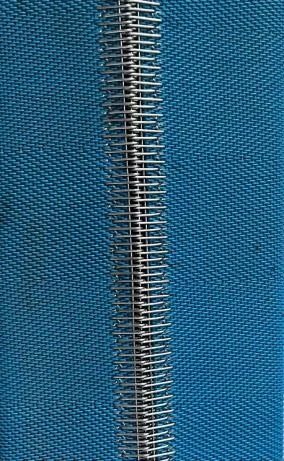
Conveyor belt maintenance teams often need to select fastening components based on more than belt width alone. Belt thickness, pulley diameter, operating conditions, and the required joint configuration can all affect whether a fastening system is appropriate. For companies managing multiple conveyor applications, understanding these factors before ordering can reduce compatibility problems and make maintenance planning more predictable. Mechanical belt fastening is commonly used across industries such as parcel handling, food, laundry, agriculture, and other light-duty conveying applications, with different fastener styles available for different belt requirements.
A practical conveyor belt lacing selection process should therefore begin with the belt specification and the operating environment. Maintenance teams can then compare fastener design, material, wire diameter, pin configuration, and minimum pulley diameter before selecting a suitable product.
Key Factors in Conveyor Belt Lacing Selection
Belt thickness is one of the first measurements maintenance teams should confirm. A fastening system designed for a thin belt may not provide the appropriate fit for a thicker construction, while selecting a fastener without considering the belt structure can complicate installation.
Pulley diameter is another important factor. The joint needs to move through the conveyor system without creating unnecessary interference or stress. Industry selection guidance commonly considers belt thickness, belt tension, and the diameter of the smallest relevant pulley when determining an appropriate mechanical fastener.
The operating environment should also influence selection. Moisture, cleaning processes, conveyed material, and the frequency of belt servicing may affect the preferred fastener material and joint configuration. For maintenance teams supporting several customer applications, documenting these conditions can make future replacement orders more efficient.
Understanding Belt Lacing Wire and Fastener Specifications
The fastening wire itself is another important selection variable. When purchasing belt lacing wire, buyers should review wire diameter, compatible pin size, belt-thickness range, material, and minimum wheel diameter rather than selecting solely according to the product name.
Intake’s official product page for its Reinforced Wire Hook Belt Fastener lists 304S as the material, 0.55 kg product weight, and 12 pcs/box packaging. Its specification table provides several configurations. For example, code 86047 uses a Φ1.0 wire diameter, Φ1.5–Φ1.7 pin, and is specified for belts from 1.6–3.2 mm thick with a 51 mm minimum wheel diameter. Code 86048 uses Φ1.4 wire, a Φ2.3–Φ2.4 pin, and covers 3.2–4.5 mm belt thickness with an 89 mm minimum wheel diameter.
Other configurations extend the listed belt-thickness range. Code 86049 is specified for 4.5–6.4 mm belts, while 86050 covers 5.6–6.4 mm. The page also lists 316L options, including 25LL, 30LL, and 1LL configurations, as well as selected Hastelloy C-276 models. These differences show why procurement teams should use the manufacturer’s specification table when matching belt lacing wire to a particular application.
Choosing the Right Configuration for Maintenance Work
Once the belt dimensions and operating conditions are known, maintenance teams can narrow the available options. The selected fastener needs to correspond with the belt thickness and provide a suitable configuration for the conveyor’s pulley arrangement. A minimum wheel diameter listed by the manufacturer is especially useful because it provides a measurable reference when evaluating compatibility.
Installation requirements should also be considered. Mechanical fastening systems can use different installation methods, ranging from hand tools to dedicated machines. For businesses handling regular belt production or repair work, equipment selection can influence installation consistency and operator workload.
Intake’s product range extends beyond individual fastening components. Its portfolio includes Carded Wire Belt Fasteners, Reinforced Wire Hook Belt Fasteners, the INTAKE CR Series, Hinge Pins, a Hydraulic Belt Fastener Machine, and a Manual Roller Lacer. This allows manufacturers and distributors to evaluate fastening components together with the equipment required for installation.
Building a More Practical Fastener Selection Process
For maintenance teams, a repeatable selection process is more useful than choosing replacement components based only on previous orders. Recording belt thickness, pulley diameter, fastener configuration, and operating conditions gives purchasing teams a clear technical reference for future maintenance work.
Intake provides mechanical belt-fastening products and installation equipment for B2B customers. Reviewing the manufacturer’s specifications before purchasing can help maintenance teams select compatible components and establish a more consistent approach to conveyor belt repair.
