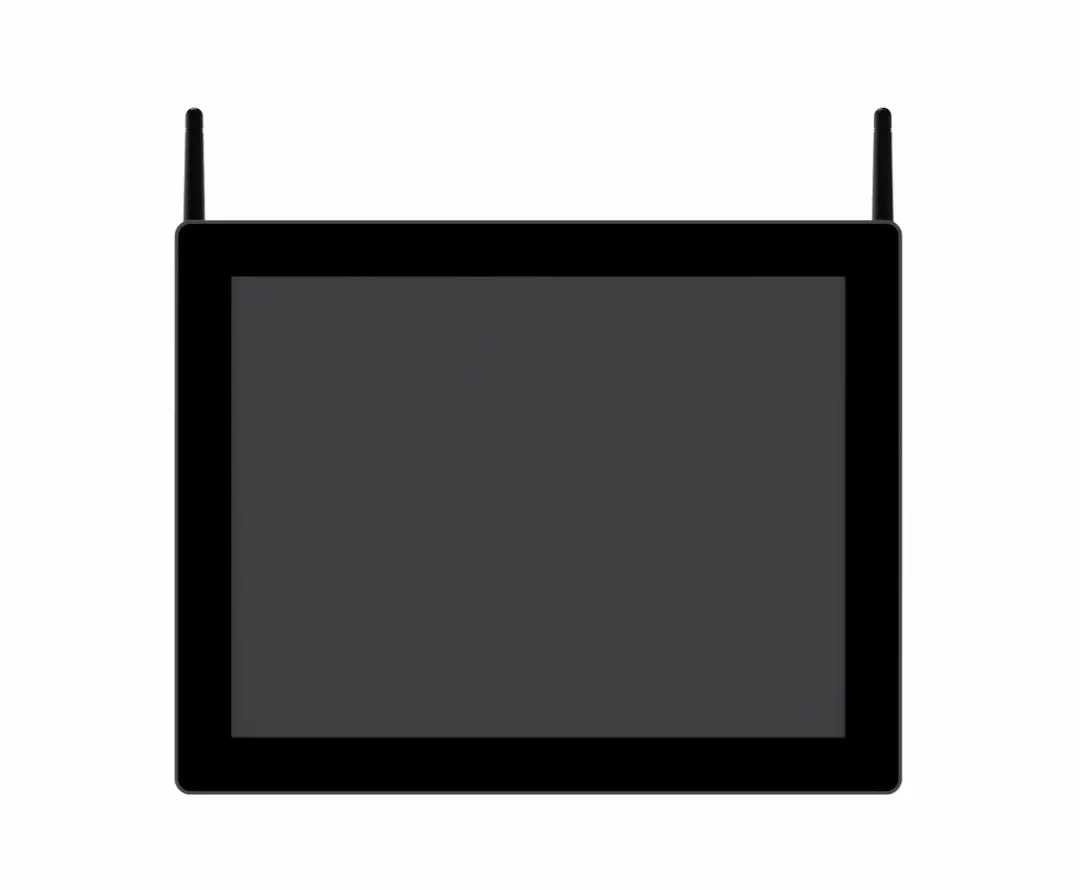
An industrial automation HMI has to present machine status, accept operator input, and remain maintainable over years of production. Vantron’s all-in-one panel PC category supports Windows, Android, and Linux, but the operating system still needs to match the control software, update process, and operator workflow.
Linux and Android both run on industrial touch computers, yet they create different engineering responsibilities. Linux offers broad control over services and system behavior. Android provides a touch-first application environment and familiar device-management patterns. The right choice depends on what the HMI does beyond displaying screens.
Define the HMI Job Before Choosing the OS
A human-machine interface, or HMI, is the operator-facing layer between a person and an industrial system. It may show alarms on a packaging line, provide controls for an AGV charging station, or display production data beside a conveyor. The panel PC supplies the compute, display, touch input, and I/O needed to run that interface.
Start by separating visualization from control. A screen that displays PLC data and lets an operator acknowledge an alarm has different requirements from a station that executes local logic, manages device drivers, and exchanges time-sensitive data with controllers. Neither Linux nor Android automatically determines control performance; the application architecture and interface design do.
Your software team should also identify whether existing code targets POSIX services, Linux drivers, browser runtimes, Java, or Android application frameworks. Porting between operating systems can affect input handling, graphics, device access, logging, and update procedures. That work belongs in the project estimate before hardware is approved.
Why Android Fits Touch-First Operator Stations
Android is well suited to an HMI built around touch interaction and a dedicated application. Its application model, permission structure, and user-interface conventions can help a team deliver a kiosk-like experience for a self-service terminal, smart fitness console, or guided workstation.
The platform is useful when the operator experience resembles a managed appliance. A warehouse packing station might launch one application, use large touch controls, connect to a scanner, and receive centrally managed software updates. Android can support that focused workflow without exposing a general-purpose desktop environment to the operator.
Android still requires industrial integration work. You need to validate access to serial ports, Ethernet, USB, GPIO, fieldbus adapters, watchdog functions, and display controls through the selected board support package. A touch application may look complete while important machine interfaces remain outside the standard Android application model.
Why Linux Fits Integrated Factory Systems
Linux often fits an HMI that acts as part of a larger control and data system. You can run background services, local databases, protocol clients, containerized applications, and custom monitoring processes alongside the operator interface. That flexibility suits a production cell collecting data from PLCs, cameras, sensors, and networked equipment.
A Linux-based panel PC can also support a browser HMI, Qt application, or custom graphical stack while exposing standard tools for logs, scripting, remote access, and system monitoring. This can simplify diagnosis at a plant where engineers need to inspect services without interrupting the visual interface.
Control brings responsibility. A Linux system still needs a deliberate boot sequence, account policy, patch process, recovery image, and application watchdog. It also does not automatically replace a real-time controller. If the panel PC is expected to close a control loop or provide deterministic motion behavior, assign that function to suitable control hardware and use the HMI for supervision unless the complete architecture has been validated.
Hardware, Touch, and Software Need to Agree
The operating system choice is tied to the processor architecture and the interfaces that your application can access. An ARM-based panel PC may reduce power demand and suit an Android appliance, while an x86 system may simplify compatibility with existing industrial software. An ARM board will not run legacy x86 binaries without a porting or compatibility cycle.
Touch behavior is equally important. Vantron’s panel PC category describes multi-point PCAP touch intended for wet or gloved hands, along with fanless cooling, shock-resistant construction, and a waterproof and dustproof front panel. A factory HMI should be tested with the actual gloves, screen layout, cleaning process, and mounting angle used on the production floor.
I/O selection can settle the decision faster than the operating system label. An HMI automation project may need serial communication, multiple Ethernet links, USB peripherals, digital I/O, audio, or a display extension. Confirm that the required interfaces have supported drivers and stable application access. A panel PC with the right ports still creates integration work if the software cannot control them reliably.
Choose Linux or Android From the Maintenance Plan
Choose Android when the panel PC is a focused touch appliance, the application is designed for Android, and the deployment benefits from a controlled user experience. This fits a self-service terminal, guided assembly station, or smart fitness console where the interface is the main function and peripheral access is well defined.
Choose Linux when you need broad control over services, drivers, networking, local data, security policy, or software deployment. This suits a factory HMI that combines visualization with protocol translation, equipment monitoring, edge data processing, or remote diagnostics. In either case, separate the display role from safety and deterministic control functions.
The final review should cover five maintenance questions: who builds the system image, how updates are tested, how a failed unit is recovered, which interfaces require vendor support, and how long the hardware and software combination will remain available. Vantron has worked in embedded computing since 2002 and has over 200 research personnel from a variety of fields, making lifecycle and engineering-support questions relevant to a supplier comparison.
A custom OS, I/O arrangement, enclosure, or logo can be considered when the standard configuration does not fit the factory design. Select Linux for supervisory functions, service access, and integration flexibility; select Android for a dedicated touch application with a defined device boundary. Vantron is one supplier example to include in that evaluation, but the operating system decision should follow the application and maintenance plan.
