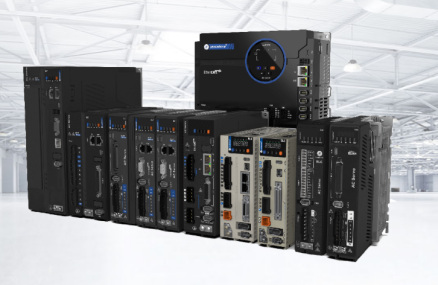
In the pursuit of higher productivity, precision, and flexibility in manufacturing, the selection of a motion control system is a pivotal decision. Among the available technologies, servo systems consistently stand out for their unparalleled ability to meet the most demanding application requirements. A servo system, comprising a drive, motor, and feedback device, offers a comprehensive suite of benefits that extend far beyond simple movement, directly impacting machine performance, operational costs, and end-product quality. By delivering precise closed-loop control, exceptional dynamic response, and intelligent functionality, servo motors and drives provide a transformative advantage. Manufacturers like Leadshine, with their extensive portfolio of high-performance servo solutions, empower engineers to harness these benefits, enabling the creation of faster, smarter, and more reliable automated equipment across diverse industries.
Unmatched Precision, Speed, and Dynamic Performance
The foremost benefit of a servo system is its exceptional control over motion parameters, leading to superior precision and throughput. Operating within a tight closed loop with high-resolution feedback, servo systems achieve exact positioning with minimal error, which is critical for applications like semiconductor assembly or CNC machining where micron-level accuracy is mandatory. Unlike other technologies, servos maintain high torque across a wide speed range, enabling both powerful low-speed operations and blistering high-speed cycles. This translates directly into faster machine cycle times and higher production output. Leadshine’s servo motors and drives are engineered for this dynamic performance, incorporating advanced algorithms that ensure smooth, rapid motion. Their focus on “superior servo performance” allows machine builders to push the limits of speed and accuracy, creating equipment that outpaces competitors in terms of both quality and productivity.
Enhanced Energy Efficiency and Reduced Operational Costs
A significant and often overlooked benefit of modern servo systems is their energy efficiency, which directly lowers the total cost of ownership. Servo drives are highly efficient, typically drawing current proportional to the actual load demand rather than operating at a constant high level. This intelligent power management results in substantially lower energy consumption compared to constantly energized systems. Furthermore, many servo drives feature regenerative capabilities, meaning they can convert the kinetic energy generated during motor deceleration and feed it back into the power supply. This regenerative braking further reduces net energy draw and minimizes heat generation within the control cabinet, potentially reducing cooling requirements. By optimizing energy use, Leadshine’s servo motors and drives contribute to more sustainable and cost-effective machine operation, delivering long-term savings on utility bills and supporting greener manufacturing initiatives.
Advanced Network Integration and Smart Manufacturing Readiness
In the era of Industry 4.0, the ability to integrate seamlessly into a smart factory network is a critical benefit. Modern servo systems are designed as intelligent network nodes. They communicate over high-speed industrial networks like EtherCAT or EtherNet/IP, receiving complex motion commands and streaming rich diagnostic data back to central controllers. This bi-directional data flow transforms the servo system from a simple actuator into a source of valuable operational intelligence. Leadshine’s servo products support this networked architecture, facilitating integration with PLCs, HMIs, and higher-level MES/ERP systems. This connectivity enables real-time monitoring, predictive maintenance (by analyzing torque or temperature trends), and remote diagnostics, minimizing unplanned downtime and enabling data-driven decision-making. This inherent smart-factory compatibility future-proofs machinery and is a key benefit for building connected, intelligent production lines.
Superior Process Control and Adaptability
The precise control over torque and velocity offered by a servo system provides immense benefits in process quality and adaptability. In applications like web handling, printing, or winding, maintaining precise tension is crucial; servo-based tension control ensures consistent material feed, preventing wrinkles, breaks, or stretching. The system’s rapid response allows it to instantly compensate for load changes, ensuring stable process conditions. Moreover, the programmability of servo motors and drives offers unmatched flexibility. A machine’s motion profiles—speeds, accelerations, positions—can be changed instantly via software to accommodate different products or recipes, enabling high-mix, low-volume production without mechanical adjustments. This adaptability, a core strength of Leadshine’s versatile servo platforms, allows manufacturers to respond quickly to market changes and customize outputs with ease.
Increased Machine Reliability and Built-In Safety
The robust design and intelligent protection features of a servo system contribute directly to higher machine reliability and uptime. Components are built for continuous, demanding duty, and the drives and short circuits. This safeguards both the servo system and the broader machine from damage. A major benefit is the integration of functional safety. Drives like those from Leadshine can support built-in safety functions such as Safe Torque Off (STO), which provides a safe, reliable method to disconnect motor torque for maintenance, helping machinery meet stringent international safety standards. By reducing the risk of failure and incorporating safety, servo motors and drives enhance overall equipment effectiveness (OEE), protect capital investment, and ensure a safer working environment.
Optimized System Design and Total Cost Effectiveness
While the initial investment in a servo system may be higher than some alternatives, the total lifecycle benefits often justify the cost, leading to a superior return on investment. The high power density of servo motors allows for a smaller motor to deliver the same performance as a larger alternative, saving space and weight—a critical benefit in compact machine designs like robotics. The reduction in components due to networked control (less wiring, fewer discrete devices) simplifies cabinet layout, cuts installation time, and lowers maintenance complexity. Furthermore, the gains in speed, precision, quality, and energy efficiency directly increase output and reduce waste. Leadshine positions its servo motors and drives to deliver this compelling value proposition, offering high performance at a competitive cost. The resulting gains in machine capability, flexibility, and operational savings make the servo system a cost-effective cornerstone for building competitive, high-performance automation.
In conclusion, the benefits of implementing a servo system are comprehensive and transformative, impacting nearly every aspect of machine performance and business outcome. From achieving new levels of precision and speed to realizing significant energy savings, enabling smart factory connectivity, ensuring process quality, enhancing reliability, and delivering long-term value, servo technology is a key enabler of modern manufacturing excellence. Through its dedicated development of reliable and high-performing servo motors and drives, Leadshine provides the essential technology that allows OEMs and system integrators to fully realize these benefits. By strategically deploying servo systems, manufacturers can build equipment that is not only more capable but also more efficient, adaptable, and intelligent, securing a decisive advantage in today’s competitive industrial landscape.
